The table-setting guide
Set a table that feels considered, not fussy.
You don't need a butler or a diagram you can't remember. A good place setting follows a few simple rules — here they are, for a weeknight and for a dinner party, plus how to layer our sets so the whole table reads as one.
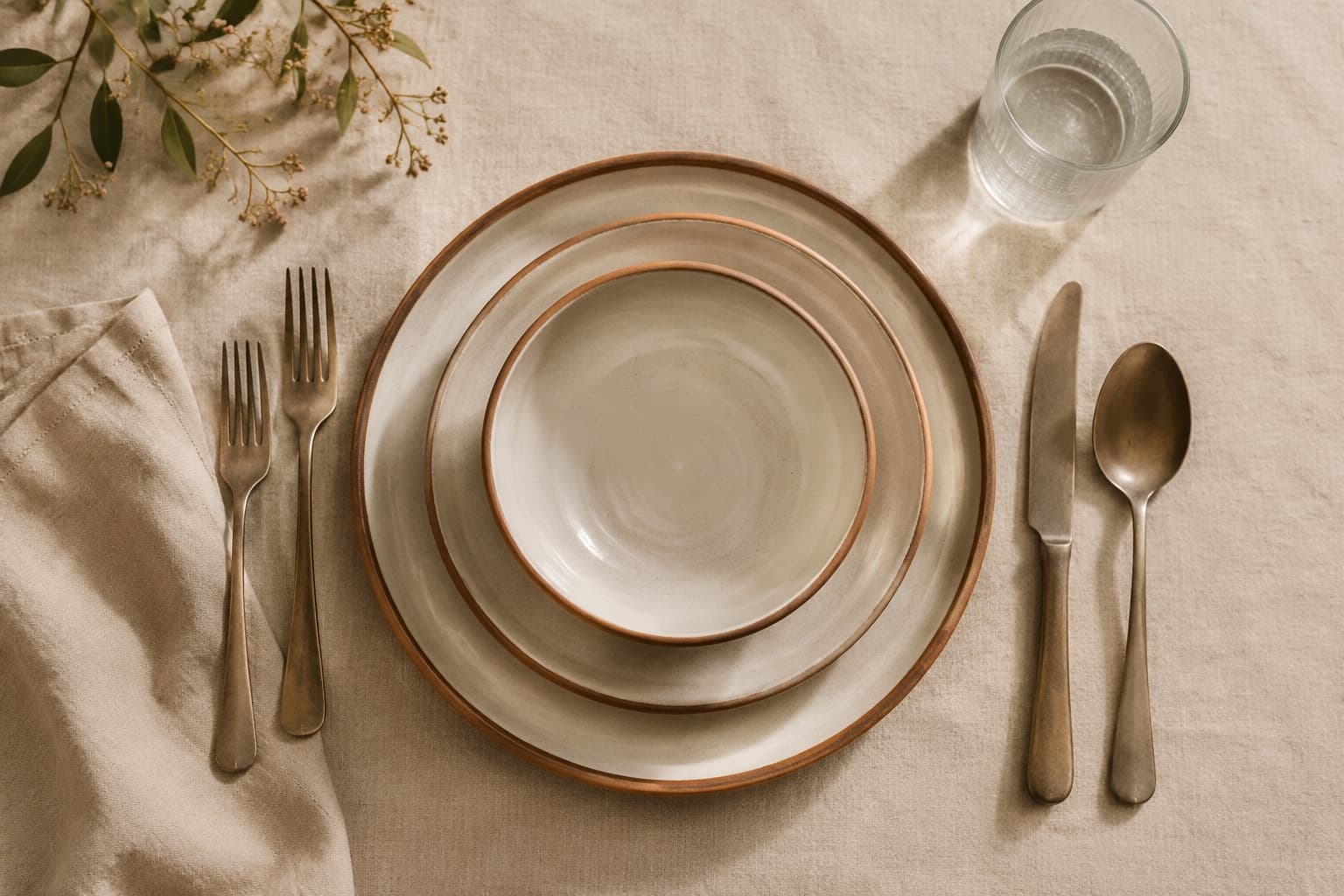
Four principles that always hold.
Start with the plate
Lay the dinner plate first and build outward. Everything else relates to it.
Work outside-in
Diners use the outermost utensil first. Place courses from the outside toward the plate.
Keep it breathing
Leave a thumb's width between pieces. A considered table has space, not clutter.
Layer your sets
Stack a salad plate on a dinner plate, a bowl on top for soup. Our sets are sized to nest cleanly.
The everyday setting
For a weeknight or a casual supper — clean, quick, and all you really need.
- Dinner plateCentered, about an inch from the table edge.
- NapkinTo the left of the plate, or on top of it.
- ForkOn the napkin, or directly left of the plate.
- KnifeRight of the plate, blade facing in.
- SpoonRight of the knife.
- Water glassJust above the knife.
The dinner-party setting
For courses and company — a little more layered, still entirely learnable.
- Charger / dinner plateCentered; the salad and bread plates layer in.
- ForksLeft of the plate, outside-in: salad fork, then dinner fork.
- Knives & spoonRight of the plate, outside-in: soup spoon, then knife.
- Bread plateUpper left, with a butter knife across it.
- GlasswareUpper right: water tumbler, then wine glass to its right.
- Napkin ringDresses a folded napkin on the plate or to the left.
A word on keeping it all nice
Most of our stoneware is dishwasher and microwave safe; glassware likes the top rack; flatware and wooden pieces prefer a hand-wash. Each product page lists exactly how to care for that set, and our food safety & care page covers the details.
Shop sets to set your table